Allocation and Order for an Engagement Ring: Loose Stone, Setting, Brand Premium and Custom Lead Time
A workable plan with a 5-3-2 budget split, loose-stone priority and custom lead-time pitfalls.
A pair of wedding rings runs from a few thousand to hundreds of thousands RMB, and the gap is not how deep the love but the allocation logic. Most sink the budget into the brand and the rest buys a small stone; the informed reverse it: set the loose-stone quality first, then the setting, then ask whether the brand premium is worth it. This article gives a workable engagement-ring budget split and buying order, with custom lead time and pitfalls, so every cent lands where it shows.
The engagement ring splits into the proposal diamond ring, usually one centre stone, and the wedding band pair, plain or micro-set. Their budget logic differs; below we take them separately with 2026 context. One charter: ring spending is allocation, not an amount contest; allocate wrong and the money lands where it holds least value.
The 5-3-2 Budget Split
Split a diamond ring budget as: loose stone 50 percent, setting 30 percent, brand or channel premium and service 20 percent. At a 30,000 RMB total, 15,000 RMB, about 2,110 dollars, takes the loose stone, roughly a 0.5 to 0.7 carat GIA H-J VS no-fluorescence; 8,000 to 10,000 RMB builds an 18K or platinum setting; the remaining under 5,000 covers certificate, engraving and care. This ratio puts the value body in the stone.
The common error is 60 percent to brand, leaving only a 30-point low-colour stone. Remember: the stone is the value body, the setting is remeltable craft, the brand is added emotional value. Misratio and the money lands where it holds least. The brand halo writes nothing into the fire, only into your payment slip.
- Loose stone 50 percent
- Setting 30 percent
- Brand and service 20 percent or under
- Avoid stone under 40 percent
Loose-Stone Priority Order
Set the loose stone priority: cut over colour over weight over clarity, for self-wear. Cut locks fire, must be Excellent or 3EX; colour G-J is enough for wear, no need to chase D-F for tens of thousands; weight by budget at the 0.5, 0.7, 1 carat sweet spots; clarity VS1-VS2, eye-clean, VVS premium is mostly for resale.
Trust GIA or add NGTC. View against white paper and black text for colour; do not be led by warm store lights. At equal budget take a well-cut smaller stone over a flat-cut larger. The loose stone is the only uncompromisable fire source in the ring. Write the priority into a pre-buy list so the store does not scatter you.
Setting Material and Workmanship
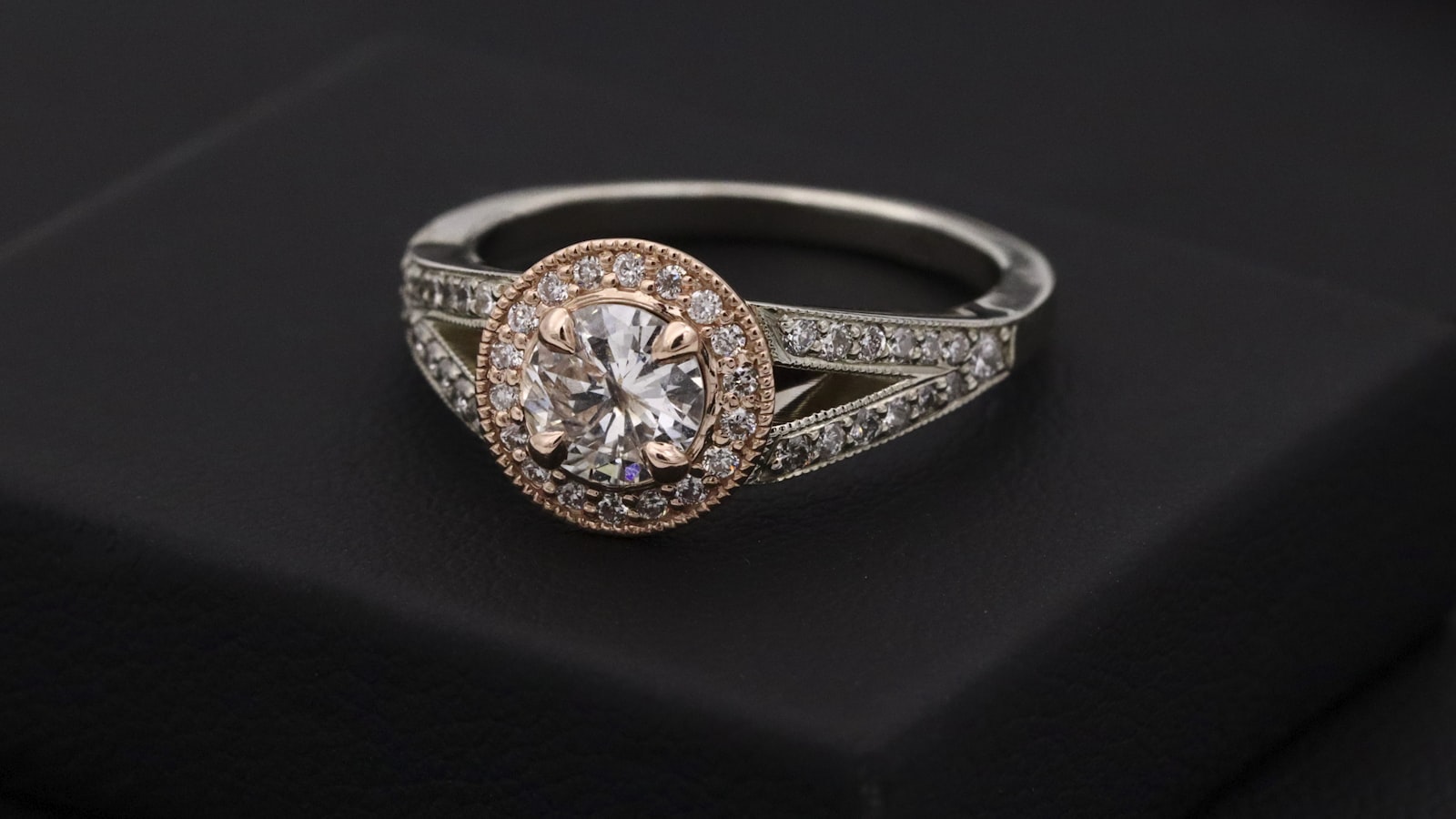
Settings are mostly 18K, Au750, hard, secure prongs, about 1,500 to 4,000 RMB, or platinum Pt950, rarer whiter, about 3,000 to 8,000 RMB but softer needing thick walls. Styles: four-prong or six-prong classic, bezel, protects the stone but looks small, halo, 30 percent bigger but dust-trapping. Six-prong is steadiest, four shows the stone most.
Workmanship runs 800 to 3,000 RMB by complexity. Band width 2 to 3 mm is steadiest; too thin deforms. Custom settings resize and engrave, more flexible than finished. Platinum is dearer but never yellows, the classic bridal choice; 18K is cheaper and wear-tough, better value. The setting is the frame; steady beats fancy.
Brand Premium and Channel
International brands, Tiffany, Cartier, carry 2 to 4 times the premium at equal specs, buying logo, after-service and experience; domestic custom studios 10 to 30 percent, good value; e-commerce loose plus local setting is cheapest but you control certificate and setting quality. Channel difference is essentially service difference.
Advice: for experience and inheritance choose brand, for value choose custom or e-commerce. Either way, GIA or NGTC certificate and re-check are non-skippable, the floor of value. The brand halo writes nothing into the fire, only into your payment slip. Spend the premium on service you truly use, like lifetime cleaning and resizing.
Band Budget and Lead Time
Wedding bands are mostly plain or micro-set; a pair in 18K is 3,000 to 8,000 RMB, roughly 420 to 1,130 dollars; platinum Pt950 5,000 to 15,000 RMB, about 700 to 2,110 dollars; small-diamond micro-set adds 2,000 to 10,000. Lead time: finished resize 1 to 3 days; custom plain 7 to 15; custom diamond ring 15 to 30; high custom or special craft 1 to 3 months.
Start at least two months before the wedding to avoid rushed choice near the date. Budget the band and the diamond ring separately; do not let the diamond eat the band, since the band is worn daily. Lead time is an invisible budget line; rushing often means settling on a style.
Custom Contract Points
Custom must sign a written contract stating: centre stone GIA or NGTC number, carat, colour, clarity, cut; setting stamp, Au750 or Pt950, gold weight in grams; workmanship breakdown; delivery time and penalty; re-check terms. A verbal promise is near useless in dispute.
Watch especially whether gold weight is written, some sellers state style not grams, leaving you unable to verify at buyback. The finer the contract, the fewer later disputes. The ring is a long-term asset; the certificate beats the promise, a point worth its weight.
Pitfall List
Pitfall one: trust brand not certificate, the brand does not cover resale. Two: brainwashed by carat, ignore cut, a big flat stone looks dull. Three: a fixed-price hard-gold setting counted as solid gold, loses at buyback. Four: custom without contract detail, gold weight, stone weight, certificate number, no proof in dispute.
Five: ignore resize and care terms. Put all terms on the receipt, with GIA number, gold weight, workmanship breakdown. The finer the contract, the fewer disputes. The ring is a long-term asset; the certificate beats the promise. Save this list to your phone and check each point in-store.
The proposal diamond and the wedding band are often lumped; budget them apart: the diamond is the event piece, the band the daily piece. Do not over-price the band to match the diamond; a plain band worn daily has the highest use rate. Keep both invoices and certificates; insure together after marriage.
The time trap of custom: even popular styles need production slots; starting two months before the wedding often leaves only stock. A grading certificate takes 3 to 7 working days, longer on holidays. Back-date from receipt by at least 15 days buffer for resize and engraving rework.
The groom's common error is sinking budget into the centre and ignoring setting security, then a loose prong drops the stone. Prong thickness, gold weight and weld are the daily-safety key. Take 0.1 carat smaller centre but a solid setting. The ring wears decades; steady beats big.
After-marriage care: each anniversary do one small thing, clean the bands, check prongs, refresh engraving wear. Make care a relationship ritual, protecting both object and feeling. Brands often give free lifetime cleaning; use the free service, cheaper than fixing problems later.
Setting style and hand shape: a fleshy hand takes a slightly wider band for evenness, a knuckle hand a clean narrow band against catching; obvious knuckle wearers take adjustable or open to pass the joint. Bands are a pair but hands differ, so adjusting the width slightly is fine, no need for exact match.
Hidden costs beyond budget: engraving 50 to 200 RMB, rush 200 to 500, resize 50 to 200, lifetime cleaning mostly free. These small items can be 5 to 10 percent of budget; ask unit prices before ordering to avoid a padded total at the end.
Ring money belongs in the stone; the brand name carves nothing into the fire.
Practical checklist
- Budget 5-3-2: stone 50 percent, setting 30, brand service 20 or under
- Loose-stone priority: cut over colour over weight over clarity
- G-J is enough for wear; do not pay tens of thousands for D-F
- Take GIA or NGTC; custom writes gold weight, stone weight, certificate number
- Start two months before; custom diamond ring lead is 15 to 30 days
Engagement-ring spending is allocation, not an amount contest. Split the total 5-3-2 to stone, setting and brand service, every cent landing where it shows: the stone for fire and value, the setting for wear and security, the brand only for that layer of emotion. Buy order must put the stone first, cut before colour grade, colour before carat, trust GIA or add NGTC and write it in the contract. Budget the band apart, start two months early, avoid rushed choice before the wedding. One honest last word: years later you remember the moment it went on, not the brand mark, so leave the premium for a stone and a solid setting worth it, and the ring looks good and lasts. The ring wears a lifetime; allocation beats logo. Who allocates well gets more fire and peace for the same money.
Frequently asked
With a tight budget, protect the stone or the brand?
Is a platinum setting better than 18K?
How long does a custom diamond ring take?
Keep reading
More Jewellery
Earrings and Face Shape: Studs, Threads, Hoops and Tassels, Plus Weight and Back Material
By face shape we split the four earring types, stud, thread, hoop, tassel, and cover weight limits and hypoallergenic back points.
Necklace Length and Neckline: How 40, 45, 60 and 80 cm Meet Round, V and Turtleneck
Using five lengths, 40, 45, 50, 60, 80 cm, against round, V, turtleneck and more, a formula you can follow directly.
Gemstone Treatment and Reading the Report: Heat, Filling, Dye and What the Certificate Says
Line by line through the GIA, GRS and NGTC treatment boxes, the line between enhancement and treatment and the value effect.