Beyond the 4Cs: How Cut Proportions, Fluorescence and the Lab Report Build Real Sparkle
Step past carat, colour and clarity. We break down table percentage, crown angle, pavilion depth, fluorescence grades and the real differences between GIA, IGI and NGTC to explain where fire actually comes from.
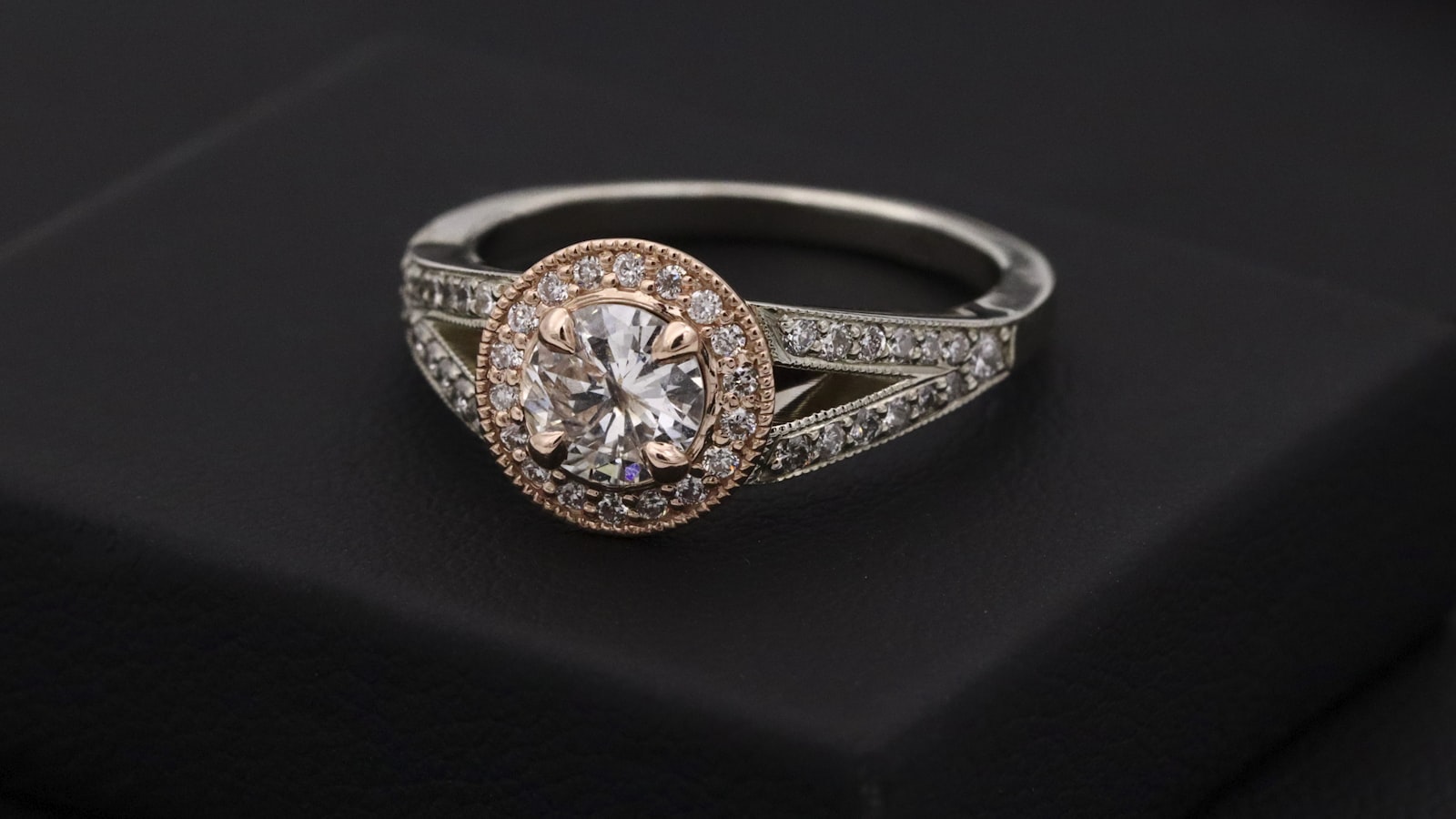
Most buyers fixate on carat, colour and clarity and treat cut as the least important of the 4Cs. Laboratory data keeps proving the opposite: cut is the first variable that decides a diamond's brightness and fire. A one-carat, D-colour, VVS1 stone with unbalanced proportions will visibly lose its sparkle to a well-cut H-colour stone. This article takes cut apart into measurable proportion parameters, then looks at fluorescence and the genuine differences between grading labs, so you can spend on visible fire rather than on a lonely letter in a sales pitch.
We compare certificates from GIA, IGI and NGTC, give concrete numbers for table percentage, crown angle and pavilion depth, and flag the price gaps you will meet in the market. After reading, you should be able to judge a round brilliant on a single report without leaning on a brand name. One reminder up front: parameters are only the floor. The final verdict on fire still has to come from your own eyes in natural daylight, so the report and the naked eye must work together.
The Golden Proportions of a Round Brilliant
The round brilliant carries 57 or 58 facets, and the proportions decide whether light refracts back through the table to your eye. The industry's agreed sweet spot is a table width of 53 to 58 percent, a crown angle of 34 to 35 degrees, a pavilion depth of 42.5 to 43.5 percent, a total depth of 61 to 62.5 percent, a girdle between thin and slightly thick, and a culet from none to medium. Push the table past 60 percent and the stone looks bigger but leaks light and loses fire; drop it below 50 percent and the whole thing reads dull, as if veiled in grey.
GIA grades cut as Excellent, Very Good, Good, Fair and Poor. The 3EX everyone mentions means cut, polish and symmetry are all Excellent. But remember that 3EX is a blended grade; what actually traps the light is the proportion data, not the count of EX marks. A Very Good stone with a 57 percent table, a 34.5 degree crown and a 43 percent pavilion will often out-fire an unbalanced 3EX. Read the data column on the report and stop counting EX badges.
- Table width 53 to 58 percent is the sweet spot; past 60 percent it leaks light
- Crown angle 34 to 35 degrees paired with pavilion depth 42.5 to 43.5 percent
- Total depth 61 to 62.5 percent is the most stable range
- Girdle thin to slightly thick, culet none to medium
The Invisible Effect of Fluorescence
GIA divides fluorescence into None, Faint, Medium, Strong and Very Strong, judged by the intensity of blue glow under ultraviolet light. Most diamonds fluoresce blue, which can cancel a faint yellowish body colour and make an I-J stone read whiter in daylight. But Strong and above can, under some lights, throw a hazy fog known as overblue and actually lose value. The market pattern: a D-F colourless stone carrying Medium-plus fluorescence sells at a 3 to 8 percent discount, while an H-J with faint fluorescence is often the smart value play because the blue neutralises the yellow.
Fluorescence strength and price are not linear. Since 2023, one-carat G-H rounds with Faint to Medium blue fluorescence have actually turned over better on the secondary market because they look brighter in daylight. But if you plan a platinum setting with the stone as centre, strong fluorescence can grey out the gaps, so see it once in daylight and once in warm light before deciding. Fluorescence is neither a flaw nor a virtue; it is a middle variable you learn to use by scene.
How Loosely GIA and IGI Actually Grade
GIA is regarded as the strictest standard; its colour and clarity calls run conservative, and the same stone often lands half a grade to a full grade lower on GIA than on IGI. IGI has issued vast numbers of reports for retail brands in recent years and grades more generously, so a stone that reads F, VVS2 at IGI might fall to G, VS1 at GIA. For that reason, a comparable GIA-graded diamond typically costs 8 to 15 percent more than an IGI-graded one. That premium buys liquidity and trust, not a prettier stone.
For budget-tight buyers, IGI high-colour high-clarity goods are a legitimate saving path, but you accept the risk that the grade is not recognised by other labs on resale. If you care about value retention and liquidity, GIA stays the first choice; if you only care about how it looks on the hand and the budget is tight, IGI is a pragmatic option. Whichever lab you pick, the certificate number must verify on the official site, so beware of swapped reports.
The Particular Case of NGTC
The most common domestic Chinese report comes from NGTC, the National Gemstone Testing Centre. NGTC compares colour against master stones, grades clarity tightly, and explicitly notes any treatment. One key difference: NGTC writes in the remarks whether a diamond has been coated or plated, something some overseas labs do not force. This matters enormously for domestic buyers, because a coated diamond amplifies its fire under lights as an illusion that collapses the moment the film comes off.
A finished ring bought in a Chinese mall usually ships with an NGTC report and is better accepted by local channels on buyback. If you set an overseas GIA loose stone domestically, add an NGTC finished-jewellery report for insurance and pawn purposes. Two reports in hand makes both liquidity and claims far steadier. NGTC's grading fee is usually 100 to 300 RMB, a fraction of what it can save you.
The Logic of Fancy Shapes
Ovals, pears, emerald cuts and cushions have no single 3EX standard; GIA gives only an overall cut grade from Excellent to Poor. An oval must avoid the bow-tie effect, where a too-shallow pavilion throws a dark band across the centre. The emerald cut relies on step facets for transparency and demands higher clarity, say VS1 and up, because inclusions have nowhere to hide and a single dark speck is magnified.
The cushion is forgiving but faces small; at equal weight it looks about 5 to 8 percent smaller than a round. Choosing a fancy shape leans more on the naked eye and the proportion notes on the report than on mechanically copying round numbers. Always turn it under natural light before buying to confirm there is no dark band or light leak. Fancy shapes usually carry a 10 to 20 percent lower premium than a round of the same specs, which is the value route.
Weight and the Look of Size
Carat weight sets the price steps but not the perceived size. At one carat, a round looks largest and an emerald smallest; a high table percentage looks bigger but leaks light. Retail price jumps at the 0.5, 0.7, 1.0, 1.5 and 2.0 carat thresholds; a 0.99 carat stone runs 10 to 20 percent cheaper than a 1.00 carat for a difference almost no one can see, which is the shrewd saving point.
Two more ways to look bigger: a halo setting visually adds about 30 percent via a ring of small stones, or an elongated oval lengthens the finger line. If the budget is stuck at 0.9 carat, take a well-cut 0.9 over a flat-cut 1.0, because the fire difference shows every day while that 0.1 carat only shows on a scale.
Price Bands and a Buying Strategy
From 2024 into 2026, diamond prices kept falling under natural supply and lab-grown pressure. A one-carat GIA 3EX, G-H, VS1-VVS2, no-fluorescence round retails around 45,000 to 80,000 RMB, roughly 6,300 to 11,200 US dollars. A D-F, VVS, no-fluorescence stone runs about 70,000 to 120,000 RMB, or 9,700 to 16,700 dollars. The same specs on IGI are about 10 percent cheaper. The half-carat sweet spot, what the market calls the five-mao, sits near 12,000 to 25,000 RMB, about 1,700 to 3,500 dollars. Lab-grown diamonds, CVD or HPHT, at the same specs cost only one-fifth to one-third of naturals, around 8,000 to 15,000 RMB per carat, or 1,100 to 2,100 dollars.
Advice: for self-wear, prioritise the look that cut and fluorescence deliver; the investment case has clearly weakened, so do not overpay for a vanity colour grade. If the engagement centre is about fire, moving budget from D colour down to G-H is the smarter move. Buy loose stones on GIA or add NGTC, keep the certificate number photo after setting, and you are set for insurance and resale later. Last line: a diamond's romance lives in its fire, not in the highest letter on a report.
Cut is the craft that keeps the light in; the certificate only translates it into numbers.
Practical checklist
- For rounds, lock onto table 53 to 58 percent and pavilion 42.5 to 43.5 percent as the hard metrics
- Under one carat for self-wear, G-J with faint fluorescence looks brighter and costs less
- At equal specs prefer GIA; if the budget is tight take IGI but accept resale discount
- For domestic setting, add an NGTC finished-jewellery report for insurance and buyback
- Do not copy round proportions onto fancy shapes; check the naked eye for dark bands and leaks
The 4C system compresses complex optical behaviour into four letters, but what actually decides whether a diamond looks good sits outside the 4Cs: proportions, fluorescence and the grading lab. Table width, crown angle and pavilion depth are the skeleton of a round brilliant, and only near 53 percent, 34 degrees and 43 percent does it trap the light; fluorescence is a double-edged sword that brightens when used right and hazes when used wrong; the report decides how much premium you pay for the same stone. Read those three layers and no salesperson will steer you with isolated words like D colour, no fluorescence. One honest last word: the natural diamond investment case has weakened sharply after 2024, so for self-wear shift budget into cut and daily look, choose GIA or add NGTC, and do not overpay for a vanity colour grade. Fire is what you see on the hand every day; the certificate is only its footnote. Understand the proportions and you buy a stone that glows, not a pretty sheet of paper.
Frequently asked
Is 3EX always better fire than 2EX?
Can I buy a strongly fluorescent diamond?
Why does GIA cost more than IGI at the same specs?
Keep reading
More Jewellery
Allocation and Order for an Engagement Ring: Loose Stone, Setting, Brand Premium and Custom Lead Time
A workable plan with a 5-3-2 budget split, loose-stone priority and custom lead-time pitfalls.
Earrings and Face Shape: Studs, Threads, Hoops and Tassels, Plus Weight and Back Material
By face shape we split the four earring types, stud, thread, hoop, tassel, and cover weight limits and hypoallergenic back points.
Necklace Length and Neckline: How 40, 45, 60 and 80 cm Meet Round, V and Turtleneck
Using five lengths, 40, 45, 50, 60, 80 cm, against round, V, turtleneck and more, a formula you can follow directly.