Monday to Friday: Five Workwear Formulas and a Reuse Matrix
Five fixed weekday formulas built on three cornerstone pieces, plus a reuse matrix that gets ten garments through a whole working week.
The difficulty with dressing for work is not any single day. It is five consecutive days that neither repeat themselves nor look like they are trying too hard. Most people fail at one end or the other: full tailoring on Monday and exhaustion by Wednesday, or a Friday so relaxed the professional signal disappears altogether. The efficient answer is a set of reusable formulas, so a small number of garments rotate into a presentable week and the morning decision cost drops to near zero, leaving your attention for the work rather than the collar.
Below are five explicit formulas, Monday through Friday, and a matrix showing how each core piece is reused across them. Follow it and the week needs roughly ten core garments and about three minutes a morning, with each day pitched correctly: authority on Monday, ease on Friday, and steady credibility in between. The table is short enough to keep in your phone, which is the point. You should be able to tick along it at seven on a Monday without forming a single original thought.
The Real Objective: A Controllable Professional Signal
A professional register is not a black suit. It is the transmission of one message: I am prepared. Controllable means you know what each outfit is saying, so Monday can carry weight, Wednesday can hold steady and Friday can loosen. You modulate that signal by combining garments rather than by wearing a uniform, which stays flexible and does not go stale, and which spares you the quiet office observation that you have worn the same thing again.
Lock down three cornerstones first: a blazer in a neutral, a pair of tailored trousers with genuine drape, and a loafer or low heel. Those three combine with anything else you own and supply the skeleton for the entire week. Variation comes from shirts, knits and a scarf, which is where the budget and the decision cost are lowest. With the cornerstones settled you have a chassis, and dressing becomes a matter of changing what sits on top of it.
Quick audit: count whether all three cornerstones are actually present. If the blazer is missing, buy a neutral one before anything else; if the loafers are missing, buy those. Without the full set the weekly formulas will not run, and no amount of variation compensates.
- Three cornerstones: blazer, tailored trousers, loafers
- Modulate the register by combination, never by uniform
- Leave the variation to shirts, knits and a scarf
Monday: Open With Weight
Monday usually holds the important meeting or the reporting slot, so it needs presence. The formula: blazer and tailored trousers in the same colour to read as a suit, a white shirt underneath, loafers to finish. Matching top and bottom pulls the body into one continuous line and the authority arrives without effort, which matters on a morning following a badly slept Sunday, because the outfit requires no judgement from you at all.
To soften it, swap the white shirt for pale blue or off-white while keeping the top and bottom matched. Monday is not the day to test a new register. Open with your most reliable combination, which saves effort and reads as dependability. This outfit also functions as the anchor for the rest of the week, since every subsequent day is a subtraction from it or a substitution within it, and you never start from a blank page again.
The number that matters: keep hue overlap between top and bottom above ninety per cent, meaning they read as effectively the same colour with only fabric distinguishing them. Matched tones hold authority more reliably than contrast does.

Tuesday to Thursday: The Rotation
Tuesday substitutes knitwear for the shirt: blazer, fine knit, tailored trousers, with a slim chain replacing the open collar. Softer, still professional. Wednesday runs on contrast: white shirt, dark straight skirt, loafers, with the calf visible so the outfit reads lighter, which suits a day spent largely at a desk and breaks up a run of consecutive trouser days that colleagues register even if they never mention it.
Thursday uses colour to lift the mid-week slump: a beige blazer, a pale grey knit and wide-leg trousers in the same beige, the whole thing pitched light. Three days share one blazer and one pair of shoes, changing only the layer underneath and the bottom half, and the visual difference is already sufficient. Reuse is the engine of an efficient work wardrobe, and the logic that keeps every garment you own working rather than resting in a cupboard.
Reuse discipline: one blazer should not appear more than four days in a week. If it does, your bottom-half selection is too thin, so buy another bottom rather than another jacket. That single correction raises the reuse rate across everything else.
- Tuesday: blazer, knit, tailored trousers
- Wednesday: shirt, straight skirt, loafers
- Thursday: beige blazer, pale grey knit, wide-leg trousers
Friday: Smart Casual With a Floor
Most offices loosen on Friday, which permits casual but not slack. The formula: a good cardigan, a white tee, denim, white sneakers, with a lightweight blazer worn over the shoulders. The hard lines of Monday to Thursday come off, one structured piece stays to hold the floor, and the effect is relaxed without being unravelled, signalling that you have entered weekend mode without having entirely logged off.
The mechanism is a single formal piece anchoring the casual ones, which is what stops head-to-toe denim reading as a day off. Friday is also a good test of reuse: check whether your blazer works over denim as readily as it does over tailored trousers. Pieces that cross registers are the ones worth investing in for a work wardrobe, because one of them does the job of two and the cost per wear halves.
The Friday floor: keep at least one formal piece in play, and if the rest is fully relaxed let that piece hold no less than thirty per cent of the visible area. Below that, Friday slides into weekend and the professional read is lost.
The Reuse Matrix
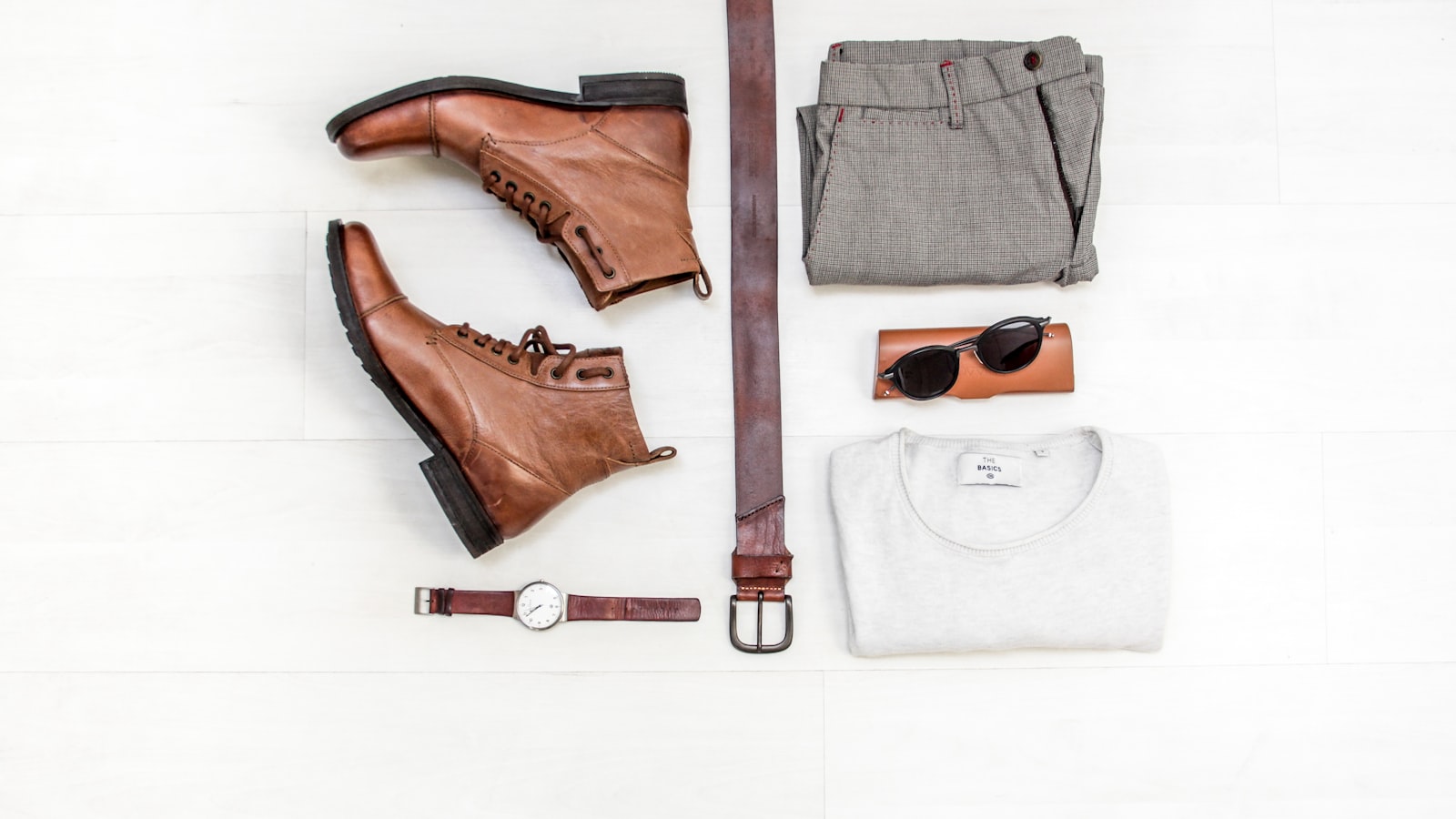
Set the core pieces out as a grid. The blazer appears Monday, Tuesday, Thursday and Friday. Tailored trousers appear Monday and Tuesday. Knitwear appears Tuesday, Thursday and Friday. Loafers appear Monday and Wednesday. White sneakers appear Friday. Roughly ten garments cover five days, each averaging two to three appearances, so nothing is decorative and no day is left improvising with an empty rail.
Pieces with a high reuse rate deserve better fabric, because they set the quality of the entire week. The inverse also holds: anything decorative that appears once should leave the system promptly. The essence of an efficient work wardrobe is a small number of good garments working frequently and reliably, rather than sheer volume propping up each day, and every dollar spent on a cornerstone is spread thin across five weekly outings.
Keep the record: note how many times each core piece appears, and flag anything averaging under two. Those are next season's first cuts, and the discipline keeps every hanger in the wardrobe employed.
- Blazer: Monday, Tuesday, Thursday, Friday
- Tailored trousers: Monday, Tuesday
- Knitwear: Tuesday, Thursday, Friday
- Loafers: Monday and Wednesday; white sneakers: Friday
Bags and Shoes: Where the Margin Sits
Bags and shoes are the most underrated details in workwear. A tote that swallows a laptop without looking chaotic reads considerably more professional than a crumpled canvas bag. Keep heel height between 3 and 5 cm, since anything higher makes an audible entrance in a meeting room and tires you out in a way that shows in your face by four in the afternoon. Match the colour to the outfit's family so the shoe does not open a second competing focal point.
Even on a relaxed Friday, sports slides are below the line and white sneakers are the floor. Keep a lipstick and a set of earphones in the bag, useful for both touch-ups and the commute. None of this occupies wardrobe space, and all of it quietly holds up the professional read, adding a point of perceived reliability with colleagues and clients that no single blazer can supply on its own.
Consider the time ledger: run the formulas and the morning decision drops from about fifteen minutes to three, roughly five hours saved in a month. That is worth more than any individual garment, and it is the actual return on building the system.
How to Pack the Commuter Bag
Zoning the bag removes the daily search. Main compartment for notebook and cosmetics pouch, side pocket for transit card and earphones, outer pocket for lipstick and tissues. With the touch-up kit and commuting essentials permanently housed, the only morning action is dropping in a laptop and the day's papers, which takes three seconds and eliminates discovering at the door that the lipstick is on the bathroom shelf.
Keep the loaded bag under 1.5 kg. Anything heavier drags a shoulder down, makes you look tired and undoes the professional read you spent the morning building. Empty it every Friday, discarding receipts and empty tubes, so it does not silently become storage. An orderly bag communicates method more effectively than a new blazer does, and method is the invisible bonus point in every first impression at work.
Practical checklist
- Lock down blazer, tailored trousers and loafers first, and the whole week has a chassis
- Match top and bottom on Monday for authority, and never test a new register at the start of the week
- Share one blazer across Tuesday to Thursday, changing only the layer beneath and the bottom half
- Keep one formal piece on Friday to anchor the casual ones, and avoid head-to-toe denim
- Buy better fabric for the highest-reuse pieces, because that is where the money actually shows
The goal of dressing for work is not a daily spectacle. It is stable credibility. Three cornerstones and five formulas hand the week over to a system rather than to inspiration, and the morning decision load goes to zero. Judge a week by whether all five days were pitched correctly and whether the core pieces were fully used, because a professional register is produced by restraint rather than accumulation. Once you stop negotiating with your wardrobe, the workday is already going well by the time you reach the lift, and that composure carries into the room.
Frequently asked
What if the company has no stated dress code?
How should a workwear budget be split?
Keep reading
More Styling
Dressing Petite: Division Points, Waist Placement and What Shoes Actually Do
Hem lengths by height, an exact waistline position and shoe choices that extend the leg, all measurable and all repeatable.

Dressing for Interviews: Industry Calibration and the First Seven Seconds
Calibrate formality to the industry, work the variables that genuinely shape a first impression, and run a checklist before you leave.

Minimalism Without Blandness: The Three Compensations
Cut supplies shape, material supplies substance, detail supplies sincerity, and together they fill the space that subtraction leaves behind.