The Accessory Rule: A Ceiling of Three, One Focal Point, and Echo
Cap the count, choose the focal point deliberately and build echoes between pieces, so an outfit moves from finished to memorable.

Plenty of people dress perfectly well and still feel something is missing, and the cause is almost always accessories: either absent, or stacked. An accessory is the full stop on an outfit, not a comma. Its job is to close the sentence, not to start another one that trails off. Used correctly, a plain outfit acquires a point of view. Used badly, expensive clothes look cluttered, the whole read drops a grade, and nobody can tell what you were trying to say.
Three things are settled below: how to control the count, where the focal point belongs, and how to build echoes between separate pieces. All of it is executable, and following it removes the most common form of accessory failure, which is stacking. The upgrade you are after is not from underdressed to dressed but from dressed to deliberate. Accessories are the cheapest lever in the wardrobe, and used well they can make a $150 outfit read like $450 without a single garment changing.
A Full Stop, Not a Comma
Start with the mental model. Before accessories, an outfit is an unfinished sentence, and the accessory is the final piece of punctuation. Its function is to close rather than to add. The moment you treat it as an invitation to keep piling on, the outfit loses control: nobody can identify what the point was, and the register slides from considered to merely busy, like an essay with three extra lines bolted on after the conclusion.
The test for whether a given piece should go on is one question: does it give the outfit a clear landing point. If not, it is a redundant comma. Few and precise always beats many and mixed. That is the governing principle behind every rule that follows, and the one most people most need to absorb, because restraint is harder than abundance and reads as considerably more expensive.
Self-check: photograph yourself with everything on. If you cannot name today's focal point, you have not set one, and you should remove pieces until a single item with real presence remains.
An accessory is the full stop, not the comma.
The Count: A Ceiling of Three
The workable ceiling is three pieces with genuine presence worn at once. Earrings, a necklace and a bag. Or a scarf, earrings and a watch. Beyond three, attention fragments and nobody retains what the outfit was about, so the effect tips from refined into noisy, which is the visual equivalent of emptying a jewellery box over yourself and reads cheaper rather than richer.
The qualifier matters: this counts pieces with presence. Small rings and plain studs can be worn in slightly greater number, because they do not compete for the eye. Anything with volume, colour or reflectance counts toward the three. Beginners should keep to the ceiling literally, which is far safer than judging by feel, and only start bending it once the eye is calibrated enough to know which piece can be added and which must go.
The number, stated plainly: no more than three high-presence accessories at once, with fine studs and slim rings excluded. Past three the attention scatters, which is a well-tested line rather than an aesthetic preference.
- No more than three high-presence accessories at once
- Earrings, necklace and bag already fill the quota
- Fine studs and slim rings do not count toward the ceiling

Choosing the Focal Point
Each outfit gets exactly one focal point, and it belongs wherever you most want to be seen. A strong jawline argues for larger earrings or a statement necklace that pulls the eye to the upper face. If the objective is leg length, spend the effort at the shoe or the ankle. A short neck should skip the choker altogether and move the focus to the ear or the wrist, because pinning attention to a weak point simply enlarges it.
Once the focal point is chosen, every other accessory retreats into support and drops in presence. If earrings are the lead, the necklace should be very fine or absent. If a scarf is the lead, the earrings become plain studs. One bright point against a quiet field is what sophistication looks like, rather than wearing everything you happen to like on the same day, and a clear focus tells people where to look.
The formula: upper body if the face is the asset, lower body if the legs are, ear or wrist if the neck is short. One focal point only, with everything else pushed below thirty per cent of its presence, and the hierarchy stays legible.
Echo: Tying Separate Pieces Together
The most satisfying relationship between accessories is echo. Bag and shoe in one colour immediately threads the outfit into a line. A scarf pitched to the lipstick connects the face to the neck. Earrings whose metal matches the watch show craft in the detail. Echo gives unrelated pieces a shared language, and while observers rarely articulate it, they register that someone thought about this, which is where the sense of quality actually comes from.
The echo only needs to be in the same family, not identical. A beige bag with a pale brown shoe, an oxblood scarf with a soft berry lip, both are low cost and high return. It is the highest-yield rule in the entire accessory discipline and the reason certain outfits read as a whole rather than a collection, which is far more useful than chasing whichever new piece is being advertised.
The echo ledger: matching bag and shoe threads the whole body into a single line, and echoes need at least two pieces to register. A single point of echo is weak, since the effect depends on the pair.
- Bag and shoe in one colour, threading the body together
- Scarf pitched to the same family as the lipstick
- Earring metal matched to the watch
Material and Formality
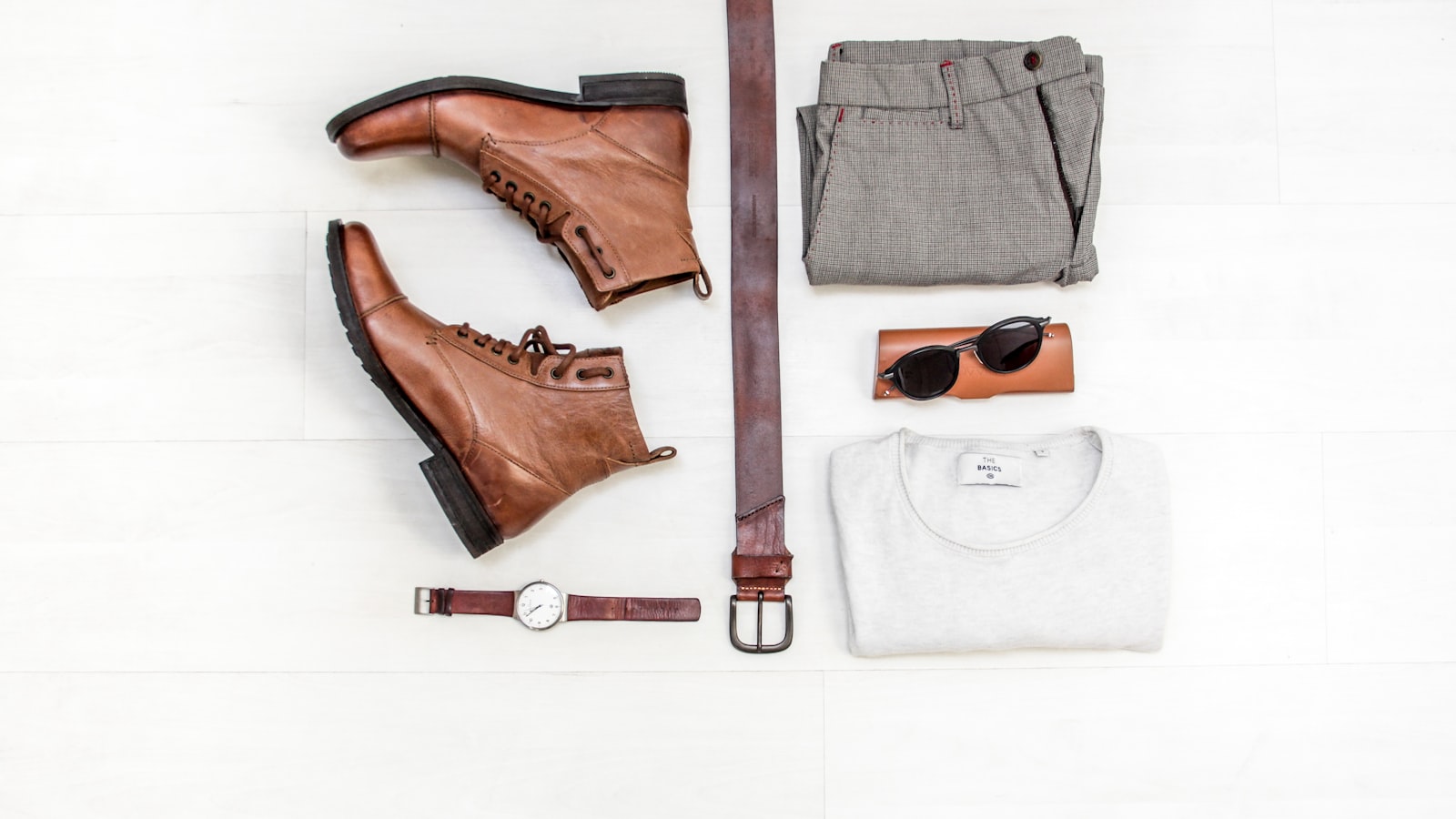
Accessory materials have to match the occasion. Commuting wants matte leather and fine metal, restrained and professional. An evening event permits shine and the suggestion of stones, and rewards presence. Sport and off-duty want canvas and silicone, and pearls forced into that context look transplanted from somewhere else, which no amount of quality can rescue. Material is the most overlooked signal of formality in the entire category.
A related point that gets missed: accessory scale should follow the frame. A small skeleton takes fine pieces, a broad presence carries volume. Enormous earrings on a petite frame read top-heavy, while a thin chain on a large silhouette disappears. Accessories obey proportion too, and whether they magnify your strengths or your weaknesses often comes down to a single centimetre in the scale you chose.
The correspondence: keep commuting accessories about seventy per cent matte and thirty per cent shine, then invert the ratio for evening. Mismatched formality is more conspicuous than any question of price, so fix the occasion first and choose the finish second.
Avoiding the Stack and the Clash
Two failure modes recur. The first is stacking: three or four chains at the neck, rings across every finger, resulting in no focus and considerable clutter. The second is clashing colour: red earrings, a green scarf and a blue bag all at once, so the body reads as a palette and nobody can locate the intention. The colours operate independently, and the outfit loses its through-line entirely.
The safe procedure: unify the metal, all gold or all silver, and allow colour in exactly one place. If the earrings carry colour, the scarf goes neutral. If the bag is bright, the shoe returns to black or white. The rule is unglamorous, let one element speak and keep the rest quiet, and the sophistication of accessorising lives almost entirely in what you decided not to put on.
The two hard numbers: unify metal to a single tone, and hold colour to one location covering under ten per cent of the body. Cross either line and the outfit reads cluttered immediately.
Accessories Against Face Shape
Choose earrings by face shape. A round face benefits from a long linear drop that lengthens, and should skip round studs and large hoops. A long face wants a short style or a stud to balance, rather than a drop that extends it further. A square jaw softens with a curved shape. Getting the earring right is effectively free contouring, and considerably more convincing than any filter.
A short neck lengthens with a V-neckline and a long chain, and should avoid a choker cutting across it. A long neck can carry a choker or short chain to contain it. Accessories are not free-standing decoration; they exist to serve your face and your neck, and the wrong choice subtracts regardless of price while the right one lifts a bare face.
Stated once: the entire discipline of accessorising is restraint. The piece you resisted putting on is usually what allowed the piece you chose to work, and what people remember is the overall register rather than any individual item.
Practical checklist
- Keep high-presence accessories to three at once, since more fragments the attention
- Set one focal point per outfit and push everything else down into support
- Build echo with bag and shoe in one colour, or a scarf pitched to the lipstick
- Match accessory material to occasion and scale to frame, both of which are proportion questions
- Unify the metal tone and allow colour in one place only, letting a single element speak
The highest achievement in accessorising is that nobody can name what you added, only that the whole thing sits right. Hold the ceiling of three, choose one focal point, and use echo to thread separate pieces together, and plain clothes are transformed. Judge the result by whether there is a clear landing point and whether everything else stayed quiet, because punctuation is never addition. It is the single mark left after subtraction, and once you learn to wear less people finally see what you wore.
Frequently asked
How should people who wear glasses handle earrings?
Do black, white and grey outfits still need accessories?
Keep reading
More Styling
Dressing Petite: Division Points, Waist Placement and What Shoes Actually Do
Hem lengths by height, an exact waistline position and shoe choices that extend the leg, all measurable and all repeatable.

Dressing for Interviews: Industry Calibration and the First Seven Seconds
Calibrate formality to the industry, work the variables that genuinely shape a first impression, and run a checklist before you leave.

Minimalism Without Blandness: The Three Compensations
Cut supplies shape, material supplies substance, detail supplies sincerity, and together they fill the space that subtraction leaves behind.